
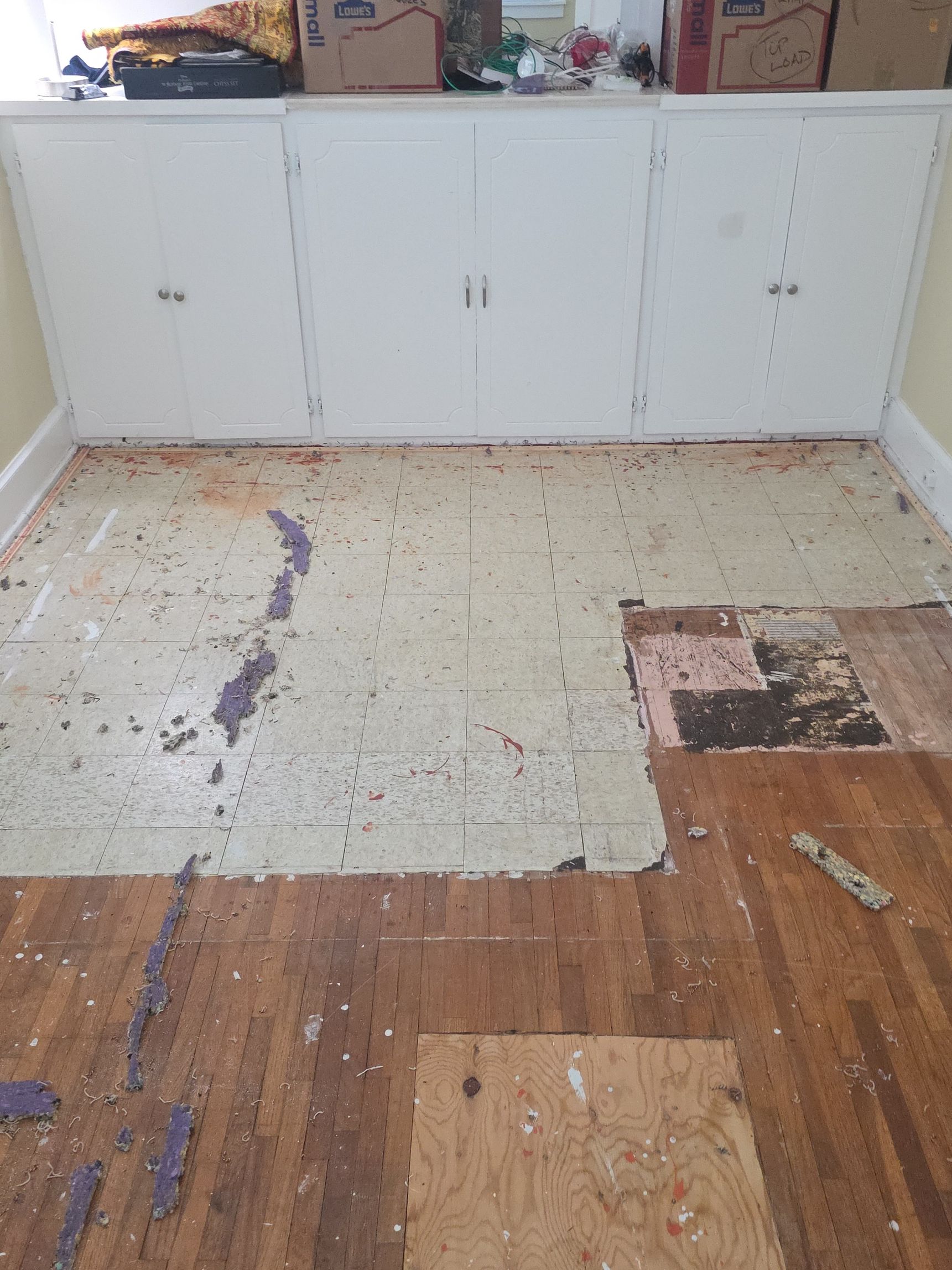
Structural Correction Before New Floors Install
Subfloor Repair in Cairo for river valley homes with softened or uneven sections caused by moisture
Any new flooring installed over an uncorrected subfloor will show the problem within months—bounce, squeaking, or visible telegraphing of the defect beneath. River valley homes in the Cairo area frequently have softened or uneven subfloor sections caused by moisture, and Jones Floor and More repairs those sections by scoping the work based on deflection, rot boundary, and joist condition rather than patching only what's visible. The patch size is determined by structural need, not by what's fastest to cut, so the repair addresses the full problem boundary and the new flooring remains stable over time.
Repair begins with deflection testing across the affected area to measure how much the subfloor flexes under load, then the rot boundary is traced to determine how far the damage extends into adjacent panels and joists. New subfloor panels are cut to span joist centers, fastened with the correct screw pattern to eliminate movement, and leveled to match surrounding surface height. If joist damage is discovered, additional structural support is added to restore load-bearing capacity before the new subfloor panel is installed.
Request a property evaluation to measure deflection and identify the full extent of subfloor damage before new flooring is scheduled.
What Proper Subfloor Repair Requires
Subfloor repair scoped by structural need involves measuring deflection with a straightedge and load test, tracing the rot boundary by probing panel edges and joist connections, and cutting the patch to span solid framing members rather than stopping at the visible damage line. The repair methodology catches the full problem boundary so adjacent areas do not fail shortly after the patch is installed. Jones Floor and More assesses the joist condition beneath the damaged subfloor and adds sistering or blocking if load-bearing capacity has been compromised.
After repair, the subfloor sits level with surrounding panels, does not flex or squeak under foot traffic, and meets deflection limits required for the flooring type being installed. The surface feels solid across the entire area, and the new flooring does not develop soft spots, cracks, or gaps at the repair boundary. The structural correction prevents the common failure pattern where a small patch is installed but the problem spreads to adjacent sections within a year.
The repair includes subfloor panel replacement, joist reinforcement if needed, and fastening to eliminate movement. It does not include crawl space moisture remediation or vapor barrier installation, which are addressed separately if the moisture source is ongoing. The goal is to restore the subfloor to the structural standard required for the new flooring, not to temporarily cover a defect.
Answers to Frequent Service Questions
Subfloor repair often raises questions about how the problem is assessed, what the repair involves, and how to know the issue has been fully corrected.
How is the full extent of subfloor damage determined?
Deflection is measured with a straightedge across the affected area, and rot boundaries are traced by probing panel edges and joist connections—the patch is sized to span solid framing members, not just the visible damage.
Why do some subfloor repairs fail shortly after they are completed?
Failures occur when the patch stops at the visible damage line without addressing deflection or rot in adjacent sections—Cairo's moisture-prone homes often have damage that extends beyond what is immediately obvious.
What does a properly repaired subfloor feel like?
The surface should be level with surrounding panels, should not flex or squeak under load, and should meet deflection limits for the flooring type—typically no more than one-quarter inch of deflection over a ten-foot span for tile or hardwood.
Does subfloor repair include fixing the joists beneath?
Joist sistering or blocking is included if the load-bearing capacity has been compromised—the repair restores structural support so the new subfloor panel remains stable over time.
How soon can new flooring be installed after subfloor repair?
New flooring can be installed immediately after the subfloor repair is complete and the surface has been cleaned and leveled—there is no curing time required for properly fastened subfloor panels.
Jones Floor and More operates as a faith-oriented company serving Cairo and the surrounding region with subfloor repair that fixes the cause before any new floor goes in. Arrange an inspection to assess deflection and rot boundaries so the repair is scoped correctly from the start.